
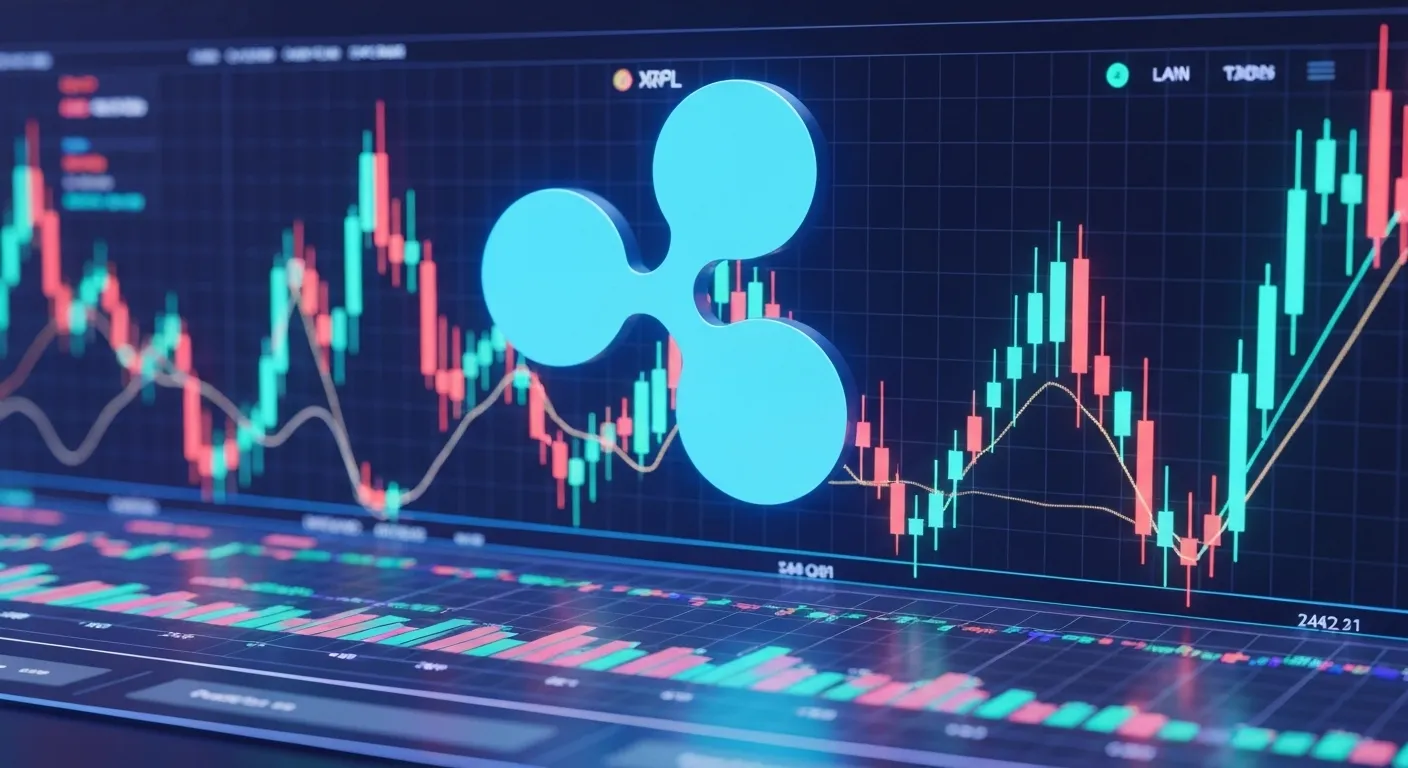
The cryptocurrency landscape consistently operates like a grand theater, characterized by high drama and unexpected, last-minute plot twists. On October 18, 2025, XRP finds itself once again dominating the main stage. Trading at approximately 2.26, this token, which has been perpetually intertwined with extensive legal battles and the ambitious promise of revolutionizing the banking sector, is currently grappling with a 6.9% decline over the preceding 24-hour period. Market activity has been intense, pushing the trading volume to 246.7 million units, with the price oscillating within a volatile range of 2.19 to $2.35. This 7% fluctuation has prompted significant deliberation among active traders and investors.
However, amidst this flurry of price action, two pivotal announcements are injecting a much-needed surge of optimism into the market: the commencement of Ripple's substantial $1 billion XRP buyback program and the heightened anticipation surrounding the U.S. Securities and Exchange Commission’s (SEC) forthcoming decisions regarding multiple XRP-backed Exchange Traded Funds (ETFs). The central question remains: Are these massive, fundamental developments strong enough to lift XRP definitively out of the current price stagnation and propel it toward a new, sustained upward trajectory?
---
Technical Outlook and Global Macroeconomic Headwinds
To establish a clearer perspective on the current market dynamics, a review of recent movements is necessary. Just last week, XRP experienced a notable slip, failing to maintain its position above the 2.50 threshold, and is now firmly anchored near the critical technical support level of 2.20. Analysis of the Relative Strength Index (RSI) shows a reading around 38. This figure is strategically close to the oversold boundary, a condition that historically acts as a precursor and potential catalyst for a sharp price rebound. Nevertheless, the token’s performance is heavily influenced by surrounding macroeconomic pressures.
The ongoing trade disputes between the United States and China, notably exacerbated by an Executive Order imposing a 25% tariff on heavy truck imports, continue to introduce widespread volatility across global financial markets. China, in a strategic countermeasure, is leveraging its dominant position by restricting the export of rare earth elements materials essential for various advanced technologies. Although a recently brokered agreement for fresh trade negotiations has temporarily alleviated some investor anxiety, the underlying, yet subtle, trade conflict between China and the European Union presents an additional, looming threat that could further complicate and disrupt global supply chains. These pervasive geopolitical uncertainties, which typically destabilize conventional markets, have an undeniable, albeit indirect, ripple effect on the sentiment and risk appetite within the cryptocurrency space, contributing to the broader market sell-off that is currently dragging XRP's price lower.
---
Geopolitical Diversification as a Catalyst for XRP
An intriguing paradox emerges from the current geopolitical climate: Is XRP primarily a casualty of these global storms, or does its unique utility position it to capitalize on the resulting market fragmentation? A significant segment of market analysts argues that XRP’s core function as a swift, low-cost asset for cross-border payments allows it to potentially flourish amid geopolitical diversity. A key factor supporting this perspective is the behavior of the U.S. dollar. When the dollar exhibits weakness as evidenced by its worst performing week since August alternative assets, including XRP, naturally become more attractive as hedges and stores of value. Furthermore, the high probability of the Federal Reserve implementing a rate cut in the near term is fostering an environment conducive to risk-taking, which traditionally benefits high-beta assets like cryptocurrencies. XRP, with its infrastructure designed to bypass traditional, often slow and expensive, global payment rails, is increasingly viewed as a robust financial bridge that is less susceptible to the monetary policy fluctuations of a single nation, thereby granting it a significant competitive advantage in an increasingly fragmented global economic order.
---
Corporate Strategy and Ecosystem Momentum
Shifting focus to internal developments, Ripple's announcement of a $1 billion XRP buyback a strategy that bypasses the traditional escrow mechanism is a profound statement of confidence that has injected palpable excitement into the community. This assertive action serves multiple critical purposes: it acts as a massive vote of confidence in the long-term viability of the token, and, crucially, it can establish a strong, organic price floor by actively removing a substantial amount of supply from the circulating market. The reaction on social platforms like X has been overwhelmingly positive and enthusiastic. Discussions range from celebratory posts proclaiming that "XRP is finally SEC-free!" to highlights of the rapid and successful sell-out of an NFT project launched on the XRPL (XRP Ledger), illustrating the vibrant, innovative utility of the platform. The recent, large-scale XRP Seoul 2025 conference, which successfully gathered over 3,000 participants from more than 40 countries, further solidified the remarkable strength and unwavering dedication of the global XRP community.
Moreover, there are increasing signs of XRP’s assimilation into conventional finance. Major U.S. cryptocurrency exchanges are not merely listing XRP for simple holding but are aggressively marketing it as a viable asset for generating compound yields. This shift signifies a growing acceptance and integration of XRP into the traditional financial product ecosystem. Concurrently, large institutional players are continuing to allocate capital into XRP, recognizing its utility for facilitating extremely fast and cost-efficient international transfers. This sustained institutional influx is a vital element for the token’s long-term price stability and market legitimacy.
---
Future Trajectories: Technical and Institutional Adoption
From a technical analysis standpoint, the successful defense of the 2.19 support level remains paramount. A sustained hold above this mark would logically set the next price target at 2.40, a point where a breakout would signal a robust continuation of a bullish trend. The MACD indicator is currently displaying a minor bullish divergence, typically interpreted as a waning of selling pressure that often precedes a price reversal to the upside. Furthermore, the SOPR (Spent Output Profit Ratio) metric hovering near 1.00 suggests that current holders, particularly those with a longer time horizon, are generally unwilling to sell their tokens at a minimal profit or at a loss, a clear indication of underlying investor conviction.
Market pundits are increasingly confident in their projections, with many forecasting that the price of XRP could surge to $3.00 by the end of the month. This bullish outlook is heavily predicated on the anticipated approval of several XRP ETFs by the SEC, including a highly watched application from Grayscale scheduled for a decision today. These ETF approvals are expected to unlock a floodgate of institutional capital, dramatically escalating market demand. Such regulatory affirmation would not only have a material impact on XRP's price but also significantly enhance its overall credibility and legitimacy in the eyes of regulatory bodies and traditional investment firms.
---
Market Risks and the Path Forward
Despite the positive signals, the path forward is not without considerable risk. The Fear & Greed Index is stalled at a value of 29, reflecting an atmosphere of mild investor fear. Furthermore, the market remains highly sensitive, as evidenced by the recent, large-scale $200 million in liquidations, primarily affecting long positions (longs), which underscores the dangers inherent in over-leveraged trading. The prevailing sentiment on the X platform is a complex blend of unbridled optimism and profound caution: on one hand, XRP memes are achieving viral status, driving retail excitement, while on the other, professional trading signals for altcoins urge prudence. This inherent duality serves as a stark reminder of the market’s unpredictable nature, emphasizing the absolute necessity of diligent risk management.
In the broader macro context, the global economy continues to contend with formidable challenges, including the recurring threat of a U.S. government shutdown and persistent financial instability within regional banking sectors. These traditional financial uncertainties often motivate a directional shift of capital toward decentralized alternative assets like cryptocurrencies. Due to its specific focus on the payments sector, XRP is positioned to capture a substantial portion of this capital flight. While the token has declined by 8% over the last 14 days, its performance over the past year a 45% increase strongly supports the narrative of significant long-term potential. Ultimately, while China’s strategic control over rare earth elements provides a powerful bargaining chip in global trade wars, it also concurrently increases the global demand for independent, politically neutral blockchain infrastructure like the XRPL as a more reliable and secure alternative for conducting global transactions.
In conclusion, October 18, 2025, may be remembered as the crucial inflection point where XRP finally and fully emerges from the long shadow of its past legal challenges. Throughout all the market swings, the combined strength of its dedicated community and the relentless innovation from Ripple have maintained the token's resilience. Traders are strongly advised to meticulously monitor the established support levels and remain acutely aware of all upcoming ETF news. This current price correction could very well represent a prime entry opportunity preceding a major new rally, or, at the very least, provide a compelling narrative for discussion among fellow crypto enthusiasts.
Market Analysis
Neutral
55%
The article forecasts a short-term bearish trend from broader market pressures, but a bullish long-term outlook bolstered by Ripple's buyback and ETF potential.
Key Points:
- Ripple's $1B XRP Buyback
- SEC XRP ETF Decisions
- Trade Tensions' Effect on Crypto
Resources & References
Sources and additional reading materials
Frequently Asked Questions
Common questions about this topic
What is XRP's current price on October 18, 2025?
XRP is trading around $2.26, down 6.9% in the past 24 hours.
What impact does Ripple's buyback have?
The $1B move could boost confidence and act as price support.
When is the SEC's XRP ETF decision?
Grayscale's ETF ruling is today, October 18, with others up to October 25.
How do trade tensions affect XRP?
They might spark volatility, but XRP's global utility could benefit from diversification.
What is XRP's next price target?
Analysts see a $2.40 breakout as the short-term bullish goal.