
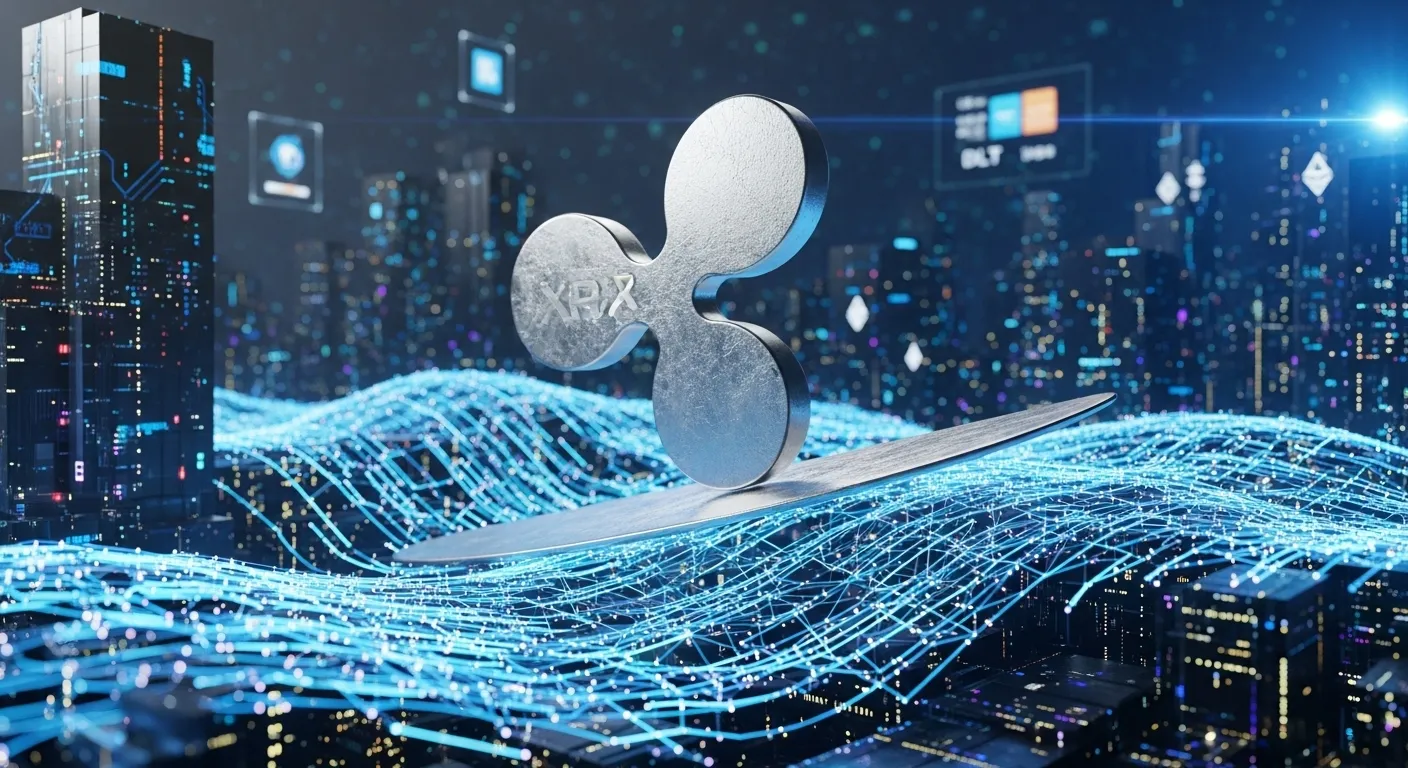
The Legal Clarity of XRP: What It Means for Crypto Regulation
I was sitting at my favorite coffee shop, mindlessly swirling my overpriced cappuccino, when I turned to my friend and asked, “Did you hear that XRP finally achieved a significant degree of legal clarity?” This massive development has been a dominant thought recently. XRP has transitioned from being a structurally sound but legally hampered asset a rusty old car stuck in the regulatory garage to a sleek, high-speed racer confidently tearing up the Web3 financial track! In 2025, the critical question is whether this newfound legal certainty can truly catapult XRP into a crypto superstar role with mainstream financial institutions. Or is this merely a temporary hype blip that the market will eventually absorb? We must conduct a thorough, analytical deep dive, akin to popping the hood and meticulously examining the engine of a complex machine, to understand the full strategic implications.
The Legal Turning Point and the Role of XRP
The legal clarity obtained by XRP, the native token of the XRP Ledger (XRPL), which was architected by Ripple, is far more than just a win in a courtroom; it is a foundational, game-changing precedent for the entire cryptocurrency industry. XRP is fundamentally designed as a jet engine for cross-border payments, capable of zipping large sums of value across the globe in a matter of seconds. Unlike Bitcoin's energy-intensive Proof-of-Work mining rigs, the XRPL is highly efficient, processing transactions with near-zero latency and minimal fees.
For years, Ripple was locked in a bitter legal dispute with the U.S. Securities and Exchange Commission (SEC). The primary fear for the entire crypto space was that XRP would be universally deemed an 'unregistered security,' a designation that would subject it to stringent securities regulations and cripple its utility for financial institutions. When the courts ruled that the programmatic sale of XRP on exchanges to retail buyers did not constitute an unregistered securities offering, it was an unambiguous green light for banks, financial firms, and exchanges globally to engage with the XRP ecosystem with dramatically reduced regulatory risk. This clarity is paramount for XRP and sets a vital judicial precedent for how other altcoins may be classified, effectively defining the lines between utility tokens and securities in a crucial jurisdiction.
Strategic Implications for XRP and Traditional Finance
Imagine XRP as a racecar forced to navigate a perpetually bumpy, unpaved regulatory road. With the legal cloud lifted, the path is now freshly paved and open for high-speed performance! This is profoundly important because banks and financial institutions which prioritize speed, cost reduction, and regulatory compliance are now far less intimidated by the regulatory uncertainty that had previously kept them on the sidelines. XRP is purpose-built for efficient cross-border transfers, and with the SEC cloud largely dissipated, major corporations and financial intermediaries are now empowered to integrate XRP for global payments, recognizing its legitimate status.
This increased confidence directly translates to greater adoption of Ripple’s On-Demand Liquidity (ODL) solution, which utilizes XRP as a bridge asset to facilitate instant, real-time settlement between various fiat currencies without the need for traditional correspondent banking relationships. ODL fundamentally solves the multi-billion-dollar problem of pre-funding nostro/vostro accounts. However, this clarity does not guarantee absolute market dominance. The asset still faces the immense challenge of competing against global payment giants like the rapidly improving SWIFT network and the rapidly growing ecosystems of Layer 1 blockchains like Ethereum and its Layer 2s (Arbitrum, Optimism), which are all vying for the future of global finance. Furthermore, regulatory uncertainty persists in other major global jurisdictions outside the U.S.
Tracking Mechanisms for Adoption and Price Movement
For investors seeking to capitalize on XRP's legal clarity, a multi-faceted monitoring strategy is essential. Firstly, the XRP Ledger (XRPL) block explorer provides non-speculative, on-chain data: monitor transaction volume, active addresses, and the specific metrics related to cross-border payment activity. This data serves as the immediate pulse of the blockchain’s utility. Second, mainstream data aggregators like CoinGecko and CoinMarketCap are useful for tracking price, trading volume, and market capitalization movements.
Crucially, keep a close watch on official announcements regarding new partnerships between Ripple and major financial institutions or payment processors. A major bank or government entity officially adopting XRP for ODL is the definitive 'giant green flag' for sustained, utility-driven demand. Finally, while not the sole basis for decisions, following reputable crypto analysts on platforms like X (formerly Twitter) can provide early insights into new partnership rumors or regulatory shifts before they permeate mainstream news. The disciplined investor must always filter out hype and prioritize verifiable, on-chain data and official news releases.
Historical Context and Lessons in Resilience
The consequences of the SEC lawsuit provide a vivid, real-world example of the impact of regulatory risk. When the SEC filed its lawsuit in late 2020, XRP’s price experienced a dramatic collapse, and many major exchanges delisted the asset. This event vividly illustrated the market's severe aversion to regulatory uncertainty. Conversely, when the court issued its favorable ruling in 2023, the market's reaction was swift and explosive a double-shot espresso, as it were with the price spiking and confidence rapidly returning. Following this clarity, financial institutions, particularly across high-growth regions in Asia and the Middle East, accelerated their pilot programs with XRP for cross-border payments, recognizing its cost and speed advantages over traditional methods.
However, the lessons learned are dual: While legal clarity opened doors, the process highlighted the inherent risks of dependency on a single jurisdiction’s regulatory framework and the fact that global adoption is a complex, multi-jurisdictional process. Some large exchanges and financial entities remain cautious, awaiting the full, final resolution of the legal proceedings. This ongoing caution underscores that the path to full global integration remains a complex, twisty backroad.
Strategic Approach to Investing in XRP
Investors looking to strategically position themselves for the XRP-CBDC/ODL wave should adopt a cautious yet conviction-driven strategy. Firstly, avoid speculative, all-in 'YOLO' approaches. A well-diversified portfolio, including foundational assets like BTC and ETH alongside a calculated allocation to XRP, is paramount. If you observe sustained growth in XRPL transaction volume and official announcements of new ODL partners, this provides a signal to incrementally increase your XRP position. The best long-term strategy for mitigating volatility risk is Dollar-Cost Averaging (DCA): invest a fixed, predetermined amount at regular intervals, regardless of the current price. This strategy smooths out market entry, much like sipping a high-quality coffee slowly to appreciate its complex notes.
Crucially, maintain relentless vigilance on global regulatory news. A formal 'thumbs-up' from a major G20 economy, such as Japan or Singapore, would serve as a powerful endorsement that could trigger a significant price revaluation. While the SEC's legal drama is a major factor, competition from other blockchain protocols and the development of proprietary CBDC solutions by central banks are non-trivial risks. Success in this market requires a disciplined adherence to a comprehensive strategy that balances a deep conviction in XRP's utility with rigorous risk management protocols.
Resources & References
Sources and additional reading materials
Frequently Asked Questions
Common questions about this topic
What’s XRP’s legal clarity?
It means Ripple’s SEC lawsuit is resolved, with XRP deemed non-security, reducing regulatory risk.
Why does legal clarity matter for XRP?
It builds trust with banks and investors, boosting XRP’s adoption.
How do I track XRP’s growth?
Check on-chain data like transaction volume on XRP Ledger or CoinGecko.
Will XRP moon in 2025?
Maybe! Legal clarity could drive demand, but competition and regulations are risks.
Is XRP better than Bitcoin?
Depends. XRP’s faster and cheaper for cross-border payments, but Bitcoin’s a better store of value.