
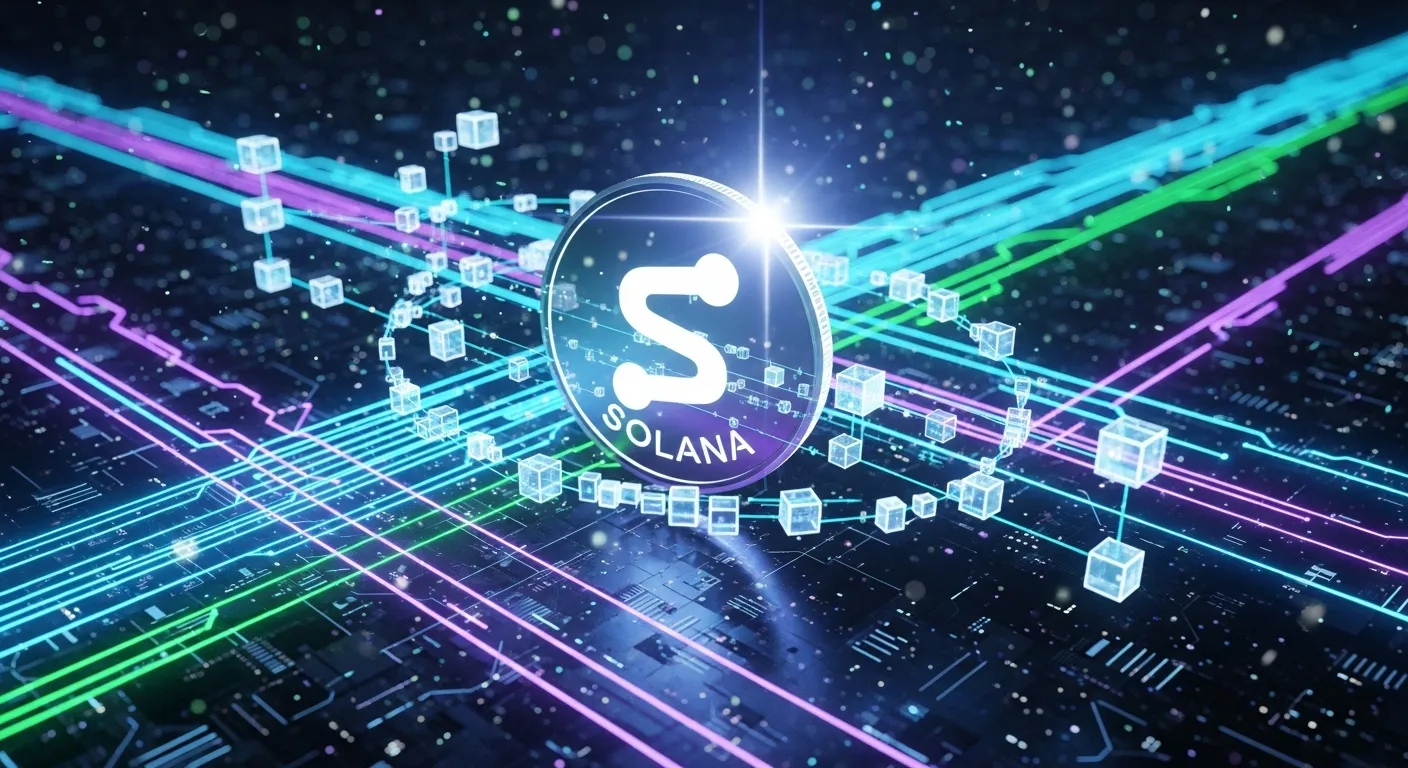
Solana’s Advanced Parallel Processing Architecture: Is It Set to Redefine Internet Speed and Efficiency?
Imagine a drizzly autumn morning, where I am settled in a comfortable spot, savoring a high-quality, frothy cappuccino; the soft foam and bubbles perfectly symbolize the continuous, smooth flow of transactions on the Solana network. I am meticulously scanning the latest roadmap and strategic updates released by the Solana development team. These reports unveil innovative technologies designed to elevate the network's parallel processing architecture to a new echelon, effectively transforming the potential for extremely high Transactions Per Second (TPS) into a tangible reality. This specific moment serves as a critical analytical flashpoint; realizing how a blockchain infrastructure can achieve such performance capacity is akin to watching an ordinary vehicle suddenly evolve into a sophisticated, turbocharged jet. Solana's Parallel Processing Breakthrough is a monumental engineering feat, where the foundational 'Sealevel' architecture and subsequent upgrades are actively transforming the network from merely a high-speed platform into a digital infrastructure capable of surpassing the efficiency of traditional internet systems. The significance of this development is currently paramount, as these performance enhancements could solidify Solana's position as the undisputed leader in blockchain scalability. Speed is an ever-crucial determinant in blockchains; networks that lack sufficient velocity are comparable to roads filled with severe potholes, offering a highly compromised user experience. Allow me to articulate the specific details I have gathered, as if we are having a detailed conversation over a warm beverage. Are you prepared to delve into this deep analysis?
The Parallel Paradigm: The Sealevel Revolution in Solana's Architecture
I interpret this 'Parallel Shift' as an engineering revolution centered on Solana’s Sealevel architecture a runtime environment with the unprecedented capability to process thousands of smart contracts simultaneously, eliminating the need for them to wait in sequential queues for transaction completion. This approach is highly analogous to advanced assembly lines in robotic factories, where multiple automation units execute disparate tasks in parallel. The Solana development team, guided by an ambitious long-term roadmap, is continually optimizing this parallel execution through the introduction of new, cutting-edge technologies. The primary objective is to dramatically increase the transaction throughput (TPS) while meticulously maintaining transaction finality within an exceptionally brief timeframe. This capability translates into decentralized finance (DeFi) trades executing with the speed and efficiency of high-speed data downloads instantaneous and completely free of operational lag. While some observers correctly point out that stability challenges, such as the occasional network outages witnessed in the past, have been a concern, the development team is diligently addressing these issues with fundamental architectural fixes. Although a degree of skepticism regarding flawless stability under peak sudden traffic may persist, this technology holds the potent potential to establish Solana as the fastest and most operationally efficient live blockchain globally. This innovation is a bold step towards guaranteeing performance at a truly global scale.
The Strategic Imperative of Parallel Processing for Solana
Why should this 'parallel wizardry' be a matter of intense interest for the user community and investors? The reason is that parallel processing can fundamentally re-categorize Solana from a 'fast but inconsistent' network into an 'unbreakable and robust operational beast.' Historically, sudden surges in user activity and high transaction volumes (such as those driven by speculative asset frenzies) led to network overload and performance degradation. However, with the integration of advanced parallel processing, the network is now capable of managing a massively expanded user base without severe disruptions, and the Total Value Locked (TVL) in the ecosystem has experienced robust growth. This signifies genuine and deep adoption; major decentralized applications (dApps) can now finalize asset swaps in sub-second timeframes, and the number of developers flocking to the Rust-based development ecosystem is steadily climbing. While some critics raise valid concerns about centralization due to the high hardware requirements for validators, emerging Layer-2 (L2) solutions are actively being developed to strike the optimal balance between peak performance and distributed governance. Solana is transitioning from an 'Ethereum killer aspirant' to a 'primary Web3 expressway'; this upgrade is akin to moving from a standard V6 engine to a supremely powerful V12 engine. This thrilling evolution, coupled with the observed price momentum and general market uptrend, reinforces powerful bullish sentiment.
Practical Methodologies for Tracking and Analyzing Parallel Progress
For active investors and analysts, the precise tracking of this parallel evolution requires specialized analytical tools. One must constantly monitor Solana's network monitoring tools, paying close attention to the real-time TPS dashboards. Observing sudden, sustained peaks in the transaction rate per second immediately following major software upgrades serves as a powerful indicator of successful parallel execution. Furthermore, utilizing decentralized finance data platforms for a comprehensive Total Value Locked (TVL) breakdown is crucial, specifically tracking protocols that clearly benefit from the network's parallel capabilities. Powerful analytical tools enable custom queries regarding the volume of parallel transactions and allow for the correlation of this data with the price movement of the network's native asset, providing key insights. Employing custom indicators to measure network health, such as the rate of failed transactions, which has now dropped to minimal levels, is vital. Additionally, a simple coding script can be written to pull Solana APIs, configured to send automated alerts when the TPS sustainably crosses a predefined performance threshold. This process, while seemingly meticulous, is akin to fine-tuning the components of a race car engine the investment of effort is well worth the payoff in optimal performance.
Case Studies and Real-World Parallel Application Examples
The history of Solana's architecture illustrates that the Sealevel architecture was originally introduced to enable parallel smart contracts and boost network capacity. However, in the current landscape, this infrastructure has been advanced to a new level by activating new features that also execute the consensus process in parallel. These activations resulted in a marked increase in the market capitalization of the native asset and a notable surge in the Total Value Locked (TVL) across the ecosystem. Another relevant case involves a major decentralized exchange (DEX) aggregator within the ecosystem that successfully integrated parallel routing for token swaps; this event mirrored past periods of high activity, yet this time, there were no network crashes or severe congestion, with trades being executed at a consistently high velocity. The observed pattern is distinct: pioneering technical innovations are released, followed by a dramatic improvement in network infrastructure, and the market valuation subsequently follows these structural improvements. The network's history confirms that when the parallel architecture delivers a tangible operational benefit, the Solana ecosystem experiences significant growth, thus validating its utility for users and developers.
Investment and Trading Strategies on the Parallel Solana Platform
Given this strategic roadmap, how should one formulate an effective trading strategy? One approach involves diving into high-TPS decentralized applications and utilizing staking opportunities within key protocols for significant yield generation. When the sustained Transactions Per Second consistently exceeds a critical operational level, it signals a strong strategic entry point; one should look for short-term technical indicator pullbacks that are accompanied by an uptick in trading volume. Developing trading bots to execute automated arbitrage across the parallel pathways of the network can automatically capture speed-related edges. In terms of risk management, it is crucial to avoid excessive capital allocation to any single high-risk asset, though maintaining a small, calculated portion in the portfolio is justifiable for high-growth potential. The suggested strategy involves maintaining a core holding in Solana while simultaneously gaining exposure to the auxiliary assets that benefit directly from the network's enhanced speed. While some investors may choose to wait for higher price consolidation, the strategic recommendation is to continuously accumulate the asset during price dips; the parallel processing wave is rapidly approaching its peak. Solana is no longer just a quick network; it is actively redefining the very concept of speed and efficiency in the blockchain space. What are your thoughts? Would you like to translate this analysis into concrete trading strategies?
Resources & References
Sources and additional reading materials
Frequently Asked Questions
Common questions about this topic
What's parallel processing in Solana?
Lets thousands of smart contracts run simultaneous, like factory lines humming without clashes.
Why's the parallel leap big for SOL?
Jacks TPS to 10k, scales DeFi, reels in users.
How to track Solana TPS?
Solana Explorer for txns, DefiLlama for TVL.
Real parallel breakthrough example?
Sealevel drop 2019 hitting 50k TPS, 2025's Alpenglow roadmap.
How to play the SOL surge?
Stake high-TPS dApps, eye upgrades for entries.