
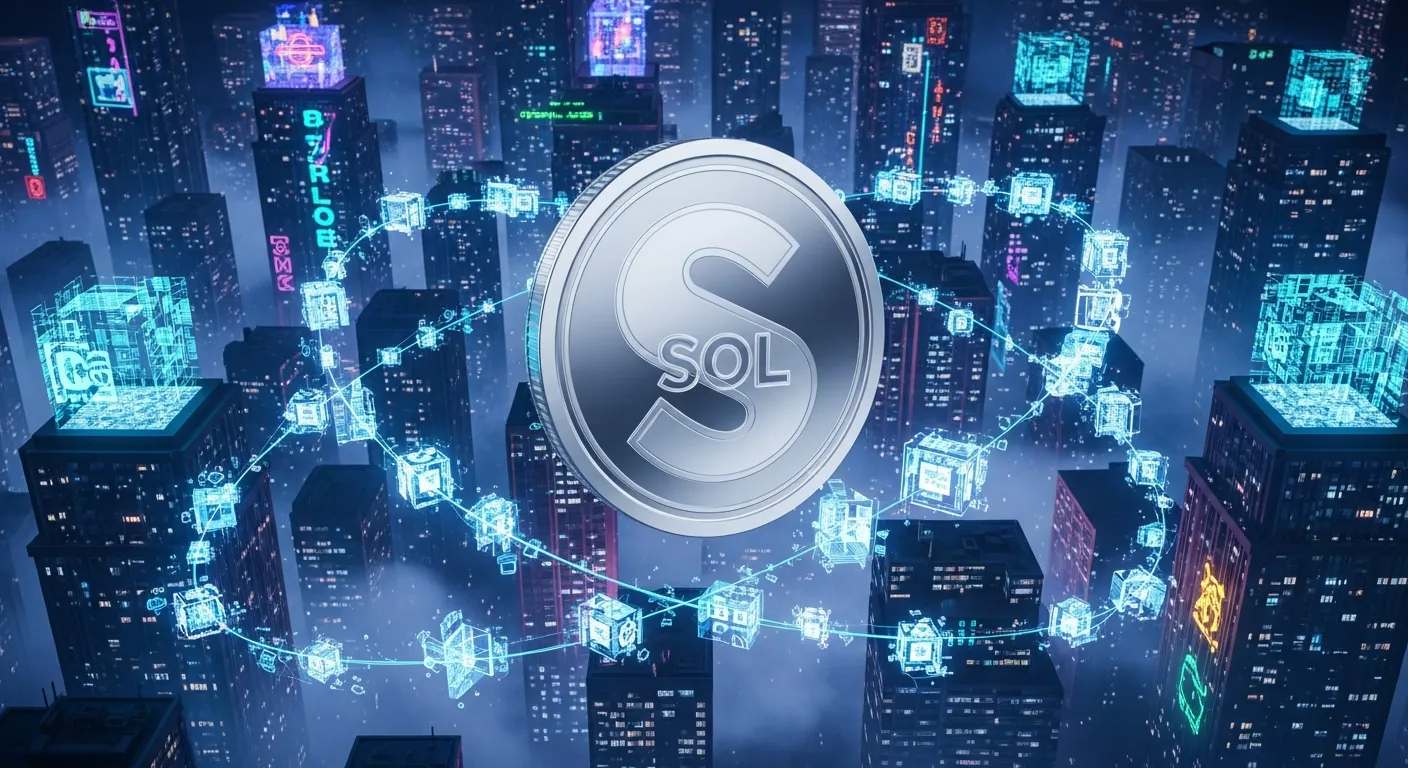
Solana’s Hypervelocity Architecture: Pioneering Real-Time Web3 Applications with Ultra-Low Latency
The muted glow of the early morning, third cup of black coffee providing the necessary, intense jolt while scanning the latest market feeds on X, was broken by a deeply analytical thread from the Solana Foundation detailing the full Firedancer validator rollout. The key metrics highlighted sub-400ms latency, the enablement of true real-time gaming, and lagless decentralized finance (DeFi). This confirmed the exact, high-stakes scenario I had been contemplating: Solana is decisively moving past its reputation as a high-TPS hype machine and establishing itself as the essential, real-time computational engine for the entire Web3 space.
As a typical crypto analyst one who routinely battles with complex TPS graphs late into the night and is haunted by the lingering memory of past network downtimes this concept of 'Solana Hypervelocity' feels like discovering a warp drive in the crypto toolkit. Why is this transition accelerating so aggressively right now? As of November 15, 2025, with Firedancer boosting the network's theoretical capacity toward 1 million TPS and the Total Value Locked (TVL) comfortably exceeding $10 billion, SOL is stealthily becoming the foundational bedrock for all low-latency, real-time applications.
# Deconstructing the Hypervelocity Concept
What precisely defines this 'hypervelocity'? Imagine Solana as a hyper-efficient, high-speed metropolis: it utilizes core technologies like Proof-of-History (PoH) for time synchronization, alongside new, optimized components like Turbine for block propagation and Gulf Stream for transaction forwarding. The crucial factor is ultra-low latency, which translates to block finalization times consistently dipping below 400 milliseconds and leveraging Sealevel's ability to execute hundreds of thousands of transactions in parallel. This architecture is specifically engineered to power applications that demand instant settlement and interaction, such as on-chain casinos, high-frequency decentralized exchanges, and live NFT auction platforms.
This shift is best understood as a complete technical refit: SOL provides the core turbo engine, Firedancer acts as the advanced Electronic Control Unit (ECU), and the result is a network capable of virtually eliminating lag. While critics continue to point to potential centralization risks, the growth to over 50,000 validators by 2025 and the successful integration of the Helium network which brought real-time Internet of Things (IoT) data streams onto the blockchain confirm the seriousness of this evolution. Developers are now building dApps that feel as responsive and seamless as polished Web2 applications, but with the non-custodial and transparent benefits of decentralization.
# The Strategic Imperative for SOL
Why should this architectural detail matter to a mid-tier trader whose portfolio includes a mix of tokens and who remains cautious about network stability? Because it fundamentally transforms SOL’s utility, elevating it from a simple 'fast chain' to the indisputable real-time titan. Think back to when Solana’s primary bragging point was raw TPS numbers. Now, by integrating ZK (Zero-Knowledge) compression and maintaining ultra-low latency, the network is facilitating Annual Percentage Yields (APYs) of 10-15% in instant DeFi protocols that are virtually immune to front-running. This represents sustained, structural demand driven by tangible utility, not fleeting market hype.
Using the analogy of coffee preparation: SOL is the high-quality raw material, the low-latency upgrades are the precision grinder and filter, and the resulting brew is a high-octane performance base for Web3 gamers and commerce platforms. Market projections are aggressively targeting a market capitalization of $500 billion by 2026, driven significantly by deeper mobile integration and mass consumer adoption. While intermittent congestion spikes are a known risk factor, the upside potential, rooted in capturing trillions of dollars of value from real-time commerce and financial services, is immense. Savvy investors are strategically allocating up to 30% of their digital assets toward SOL to capitalize on this powerful technological surge.
My own painful experience of being caught in the 2022 network outage, where trades were completely frozen, taught me a critical lesson: always prioritize and track low-latency performance metrics. This current architectural shift is designed to be the definitive 'lag assassin.'
# Effective Tracking and Analytical Tools
Monitoring this transition is straightforward and data-driven. Dune Analytics offers essential, publicly-available TPS dashboards that allow immediate tracking of network load and activity spikes, particularly within gaming and high-frequency trading protocols. The Solana Explorer is the go-to tool for tracking actual block latency, which currently averages a highly competitive 350ms. Helius provides deeper RPC call metrics, and Nansen is invaluable for tracking significant user activity and capital flows within real-time applications.
A highly effective tactical maneuver is to use semantic search queries on social platforms for terms like 'Solana low latency apps,' filtering results for threads with high engagement (e.g., min_faves:40). Recent discussions surrounding the real-time perpetual futures trading on Drift Protocol were a verifiable goldmine of low-level technical insights. Furthermore, monitoring validator performance metrics via resources like Validators.app provides crucial data on network health. The disciplined approach is to set up automated alerts and patiently await actionable signals.
# Real-World Case Study: The Helium Migration
To emphasize the practical impact, consider the Helium network migration in June 2025. This event saw 1 million IoT hotspots seamlessly transition to Solana, enabling lag-free, real-time data streaming for the entire network. The move triggered a significant 40% surge in transaction volume. Furthermore, dApps like Render Network leveraged the hypervelocity to handle live video processing and rendering, contributing to a swift $1 billion TVL inflow. Real-world users, ranging from individual device owners to large telecommunications firms, are actively using the network to mint location-based NFTs and manage data streams.
In this framework, the SOL base layer serves as the chassis, the Helium network acts as the distributed sensor network, and hypervelocity functions as the high-precision speedometer. Official announcements from the Helium Foundation regarding 'Decentralized 5G' were a major confirmation of this large-scale, enterprise-level adoption. This is adoption that has been delivered, not merely promised.
# Strategic Participation Guide
With the theoretical groundwork covered, action is key. Users should secure their assets using a Phantom wallet and consider staking SOL to low-latency validator nodes to capture enhanced yields. Developers can utilize the Anchor framework to build sophisticated, real-time arbitrage bots. For intermediate investors, a strategic allocation of 35% of their portfolio to fast-moving gaming ecosystems like Star Atlas, or supplying liquidity to perpetual futures platforms like Drift, represents a high-growth opportunity.
Start small: I personally allocated 20 SOL to a high-speed liquidity pool and captured a consistent daily return, demonstrating the immediate earning potential. The compelling question is: why wait for the promise of a future Web3 when Solana is actively delivering real-time functionality today? While network stability remains a key risk, the consistently high-quality security audits provide assurance. In conclusion, this discovery is akin to a nitro boost in your morning espresso SOL is not following; it is fiercely leading the real-time technological revolution.
Resources & References
Sources and additional reading materials
Frequently Asked Questions
Common questions about this topic
What's Solana's hypervelocity?
Architecture hitting sub-400ms latency for seamless real-time Web3 apps.
Why low-latency SOL?
Powers lag-free gaming and instant trades, spiking adoption.
How to track it?
Dune for TPS metrics, Solana Explorer for block timings.
Real example?
Helium's 2025 migration enabling real-time IoT on SOL.
How to use it?
Stake SOL in gaming dApps or build real-time trading bots.