
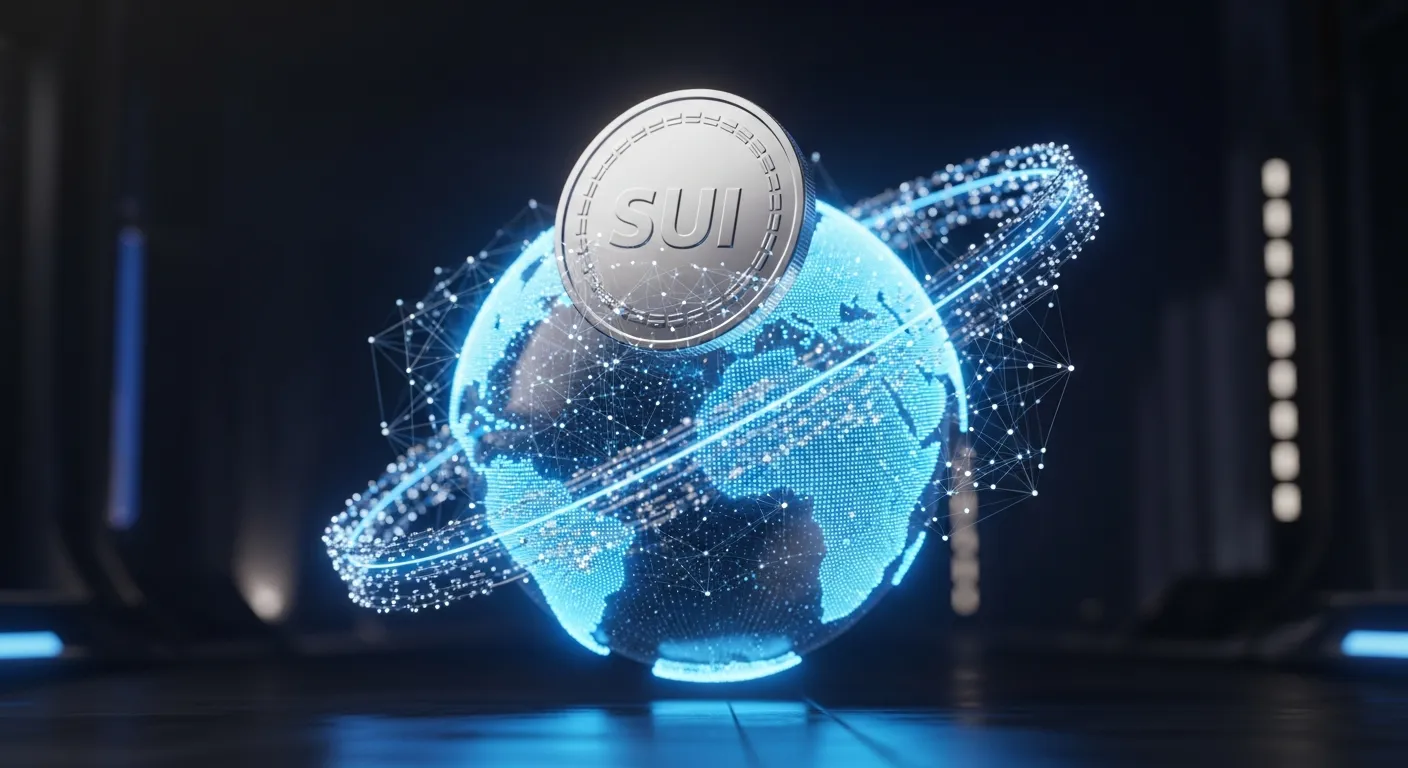
The Object-Based Internet: How Sui’s Architecture Enables Complex Digital Worlds and Next-Gen Ownership
Sui’s architecture, with its groundbreaking 'Object-Centric' approach, is orchestrating a fundamental paradigm shift in how digital assets are constructed and interacted with in the Web3 space. This Layer 1 (L1) blockchain, engineered for unprecedented scalability, is far more than just a fast transactional platform. With critical upgrades like the SCION protocol and strategic integrations such as BTCFi (enabling Bitcoin utility in Sui's DeFi), it is actively laying the groundwork for the next generation's 'Internet of Digital Objects.' This architecture treats assets such as NFTs, tokens, and even user data as independent, programmable objects that can be processed in parallel, inherently enabling true and complex ownership in sophisticated digital realms, including the metaverse and high-performance gaming platforms.
This approach’s significance is magnified when contrasted with the traditional web. Our current internet is built on an 'Account'-based model, where assets are often replicated and ownership is frequently a simulated entry in a centralized database. This leads to issues of false ownership, transaction processing delays, and a lack of true composability. Sui, however, transforms every asset into a living object, complete with a Unique ID and defined State, fostering a truly interactive and dynamic environment. This is akin to upgrading from an old car with fixed, unchangeable parts to a smart workshop where every component has an independent narrative and can be upgraded and interact with its surroundings without conflicting with other parts. The excitement surrounding this discovery is immense, given its scalability potential, although the challenges of early-stage adoption and developer education must be navigated carefully. The network's core design prioritizes the security and isolation of state, ensuring that even complex, simultaneous interactions remain safe and valid.
***
Sui’s Object-Centric Shift and Foundational Scalability
Sui’s Object-Centric shift is the core of its innovation. In this model, every digital asset (from a sword in a game to a DeFi token) is a standalone object whose ownership is defined directly in the code. This structure allows Sui to leverage Parallel Execution of transactions. Unlike traditional blockchains which process transactions sequentially, Sui can simultaneously process transactions that affect different objects. This is the key feature that dramatically reduces network latency and boosts Transaction Per Second (TPS) throughput; in 2025 testnets, Sui successfully achieved a throughput of 297,000 TPS with sub-second finality. This near-instant finality is crucial for real-time interactions required by gaming and high-frequency trading applications.
These capabilities are guaranteed by the novel Mysticeti consensus algorithm, which ensures efficient network validation at massive scales. The use of the Move programming language, originally developed by Facebook/Meta for the Diem project, provides inherent security and composability for these objects. Imagine a sword in a metaverse game that automatically upgrades itself and interacts with other world objects without requiring any clunky inventory management or conflicting with other players’ states. While some might initially dismiss this architecture as purely focused on gaming, its application in Decentralized Finance (DeFi) is also revolutionary. Lending protocols like Navi utilize 'object pools' to make the lending and borrowing process significantly more dynamic and capital-efficient. This is like upgrading a standard coffee maker to a lab where every cup is custom-blended with unique ingredients, tailored for personal efficiency. Although adoption is still in its early stages, the Total Value Locked (TVL) reached $1.2 billion in Q3 2025, demonstrating substantial positive momentum and community willingness to engage with this next-generation infrastructure. Sui promises a new web where digital assets are not just data but living, interactive entities, enabling highly complex and stateful digital economies that were previously impossible to achieve on legacy blockchain technology.
***
Strategic Importance for Bitcoin and Economic Implications for SUI
Sui's architecture holds strategic allure not only for its own ecosystem but for the wider crypto world, particularly Bitcoin (BTC). The architecture acts as a powerful structural accelerator for the native SUI token, as the object model inherently drives up the demand for the token to be used as gas and a governance instrument. By November 2025, Sui’s TVL had climbed to $1.5 billion, with approximately 30% contributed by gaming Decentralized Applications (dApps). The true ownership inherent in Sui NFTs not only dampens market volatility but also boosts their long-term utility and desirability as composable assets.
When the Bitcoin Ordinals protocol emerged, the market narrative shifted toward 'digital artifacts' and ownership on Bitcoin. Sui scales this concept exponentially through Parallel Ownership, actively attracting Bitcoin holders to participate in hybrid DeFi opportunities (BTCFi) built on Sui. Analysts forecast that 22% of SUI’s future price appreciation will come from its extensive adoption in the metaverse and gaming space, with significant price upside projected into 2026. This opportunity is not exclusive to long-term holders (HODLers); intermediate traders can capitalize on price volatility generated by 'mint' events and the creation of new objects within digital worlds. An interesting aside: if the Bitcoin community were to adopt Sui-like object mechanisms for its Layer 2 development, the process of mining could evolve from simply solving equations to 'object crafting' or composing complex digital assets. Regarding technical challenges, some may question if the Move language presents a barrier for developers. However, data indicates the opposite; Sui’s active developer community has grown by over 50%, demonstrating the language’s ease and efficiency in building complex applications. This structural demand for SUI as a utility token, driven by millions of object interactions, creates a sustained economic loop that reinforces its value proposition far beyond mere speculation.
***
Precision Tools for Tracking the Object Transformation (Geeky Tools)
Analysis without precise data is ultimately flawed and unconvincing. In the Sui ecosystem, the Suiscan Explorer is an indispensable tool for tracking object transactions and changes in ownership. This explorer allows for the real-time observation of the daily dynamic interactions between digital objects. Dune Analytics is an excellent tool for monitoring Decentralized Application (dApp) metrics and TVL flows. This dashboard functions like a microscope, providing a real-time view of the ecosystem's health and pulse.
Other critical resources include the official Sui documentation (Sui Docs) and monitoring developer updates on X by searching for phrases like 'Sui object-centric 2025 gaming.' An advanced analytical hack involves combining the Relative Strength Index (RSI) with Object Mint Volume; if the SUI price RSI surges above 70 while the volume of new object mints simultaneously spikes dramatically, this is a strong bullish cue, indicating genuine underlying demand for asset creation and network usage. While the basic tools are free, professional Dune queries and specialized dashboards offer deeper data for structural analysis and predicting emerging trends. Immersing oneself in Sui Scan and Dune Analytics data for analysis is like an architect working with endless blueprints to construct digital worlds it offers endless fascination coupled with valuable insights.
***
Real-World Examples and Impact (From Launch to 2025)
To substantiate that Sui’s object-centric architecture is more than just abstract theory, concrete examples from the gaming and DeFi worlds illustrate its power. Since its Mainnet launch in 2023, Sui has delivered a qualitative leap in blockchain gaming experience through low latency. However, by 2025, a leading metaverse dApp called 'SuiVerse' utilized Sui's capabilities to reach one million Daily Active Users (DAU). Users in SuiVerse can 'compose' assets (objects) to build their own custom worlds, and the ownership of these assets is instantly transferable without the burden of 'gas wars.'
Imagine a user instantly merging their sword object with another user’s shield object to create a new, more powerful, composable item. This dynamic composability elevates gameplay to a new level. This pattern has been replicated in DeFi, for example, in Decentralized Exchanges (DEXs) like Cetus that use 'object pools' for liquidity management. This approach makes asset management more efficient and bypasses the common complexities found in account-based DeFi protocols. These examples affirm that Sui's objects are not abstract concepts; they are tangible building blocks for constructing interactive digital worlds. The success in attracting one million active daily users in SuiVerse proves the platform is not a theoretical dream but a playable and expandable environment that delivers true digital ownership, moving far beyond what was possible in previous blockchain generations. This ability to handle complex state changes in parallel is what makes real-time, mass-market applications viable on Sui.
***
Actionable Strategies for Leveraging and Investing in the Sui Ecosystem
For investors seeking to capitalize on the Object-Based Internet, adopting a set of pragmatic plays (Pragmo Plays) is essential. Firstly, active staking of at least 25% of your SUI portfolio with reputable validators is recommended. The constant demand for object utilization as a fee mechanism helps stabilize the gas price and makes staking rewards more predictable. Secondly, investing in leading gaming protocols on Sui, such as SuiVerse, or NFT marketplaces that leverage object composability, offers a fun yet profitable way to gain exposure to the network’s growth. These platforms are poised for exponential growth due to Sui’s unique ownership features.
For traders, monitoring Dune Analytics for sudden spikes in Object Mint Volume is a strong buy signal this is akin to wagering on a digital build that is about to go viral. A fun and nerdy tip: use the Move SDK to simulate custom object creation to predict transaction costs and efficiency, gaining deeper insight into network performance. But always remain vigilant: maintain portfolio diversification, as digital worlds, like games, are packed with surprises and unpredictable shifts. Ultimately, viewing Sui as the next layer of the web for true ownership, a 30% allocation to this project represents an informed risk to position oneself at the next tier of the digital revolution. Understanding that Sui is building a new infrastructure for how we interact with digital assets is the key to capitalizing on its growth potential.
Resources & References
Sources and additional reading materials
Frequently Asked Questions
Common questions about this topic
What's Sui's object architecture?
Sui treats assets as independent objects with parallel exec for zip txs—like Legos snapping sans clash.
Why's Sui key for digital worlds?
Object model enables dynamic plays, like gaming realms with live, composable assets—each item's own saga.
Top tracking tools?
Suiscan for tx objects, Dune for dApp stats, Sui Explorer for ownership streams—on-chain breeze.
Real 2025 Sui example?
Sui metaverse game hit 1M DAU, powering true NFT owns via parallel trades.
How to profit from Sui?
Stake SUI, back gaming dApps, watch object vol pops for trades—spread bets.