
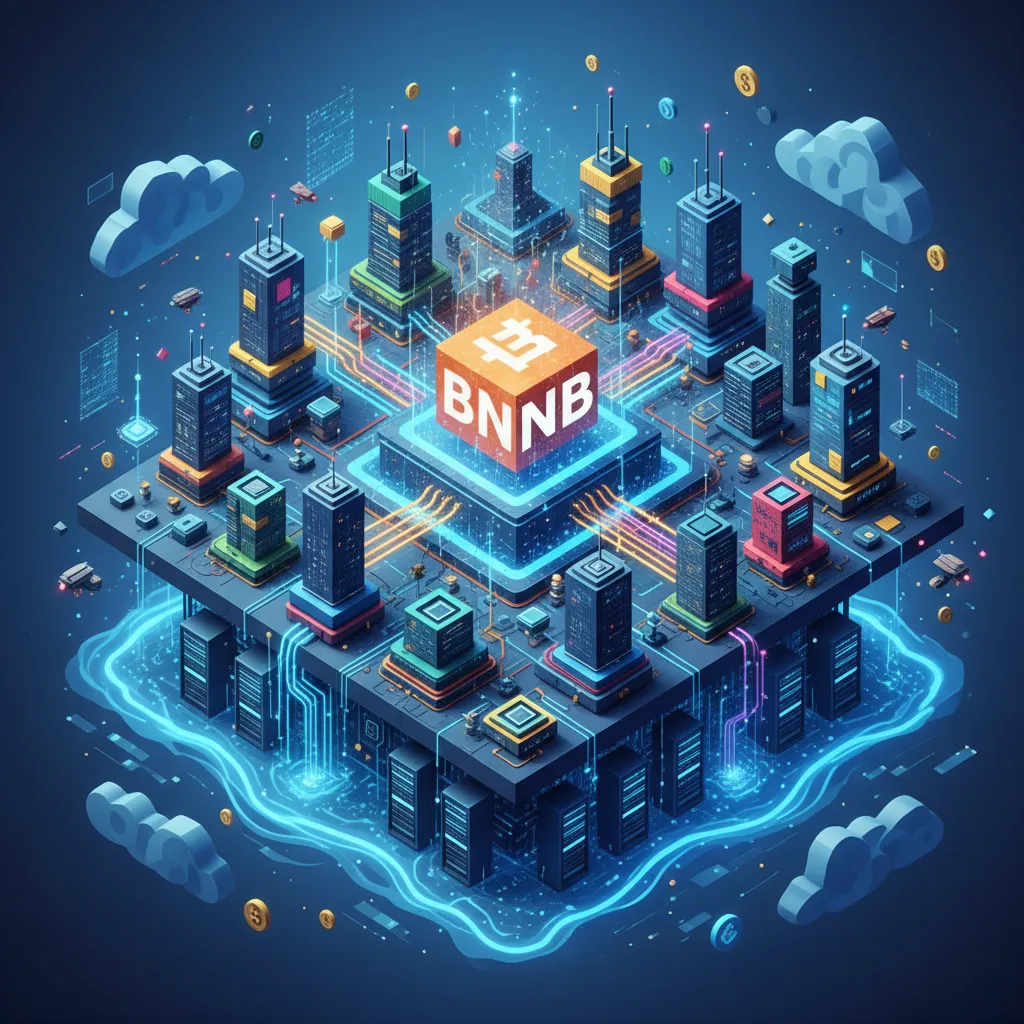
Concept Overview
Hello and welcome to the frontier of decentralized finance on the BNB Chain!
If you’ve been yield farming, you know the drill: move your assets, stake them for tokens, claim rewards, and then immediately try to find the next best pool to compound your gains. This constant, manual hunting for the highest Annual Percentage Yield (APY) is often tedious, slow, and misses fleeting opportunities. This is where we introduce a powerful evolution: Building BNB Chain Cross-Protocol Yield Engines Using Signal-Driven Capital Allocation.
What is this? Think of it like having an automated, highly intelligent hedge fund manager that specializes in the BNB Chain ecosystem. Instead of *you* manually checking PancakeSwap, Venus, and other protocols for the best rates, a Cross-Protocol Yield Engine automatically connects to multiple DeFi applications. The "Signal-Driven" part is the magic: the engine doesn't just chase raw numbers; it uses external, timely data like market sentiment indicators or cross-chain intelligence reports as *signals* to predict where the best, safest yield will be *next*. It then intelligently moves your capital across different protocols to capture that predicted opportunity.
Why does it matter? The BNB Chain, known for its low fees and speed, is a powerhouse for DeFi, boasting a significant Total Value Locked (TVL) and high user activity. By deploying signal-driven engines, you move beyond simple liquidity provision. You gain the edge of Data-Driven Capital Allocation and Liquidity Composability, allowing your capital to move seamlessly between lending, staking, and liquidity pools to maximize returns while reacting faster than manual farmers. For intermediate users, this unlocks complex, capital-efficient strategies previously reserved for institutional players, all while leveraging the cost-efficiency of the BNB ecosystem. Get ready to learn how to build this autonomous advantage.
Detailed Explanation
This is the main body of the educational article:
Core Mechanics: Deconstructing the Signal-Driven Yield Engine
The power of a BNB Chain Cross-Protocol Yield Engine lies in the sophisticated interplay between its three core components: the Data Ingestion Layer, the Signal Generation Logic, and the Execution Orchestrator. Understanding these layers is key to grasping how this automated system outperforms manual yield farming.
1. Data Ingestion Layer (The Senses)
This layer is responsible for collecting, cleaning, and structuring the raw data the engine needs to make decisions. On the BNB Chain, this involves listening to on-chain events and fetching off-chain context:
* On-Chain Data: Real-time querying of smart contracts on the BNB Chain (e.g., using The Graph or direct node interaction). This pulls critical data points like:
* Current APYs/APR of major pools (e.g., on PancakeSwap, Venus Protocol).
* Liquidity depth and slippage metrics across various Automated Market Makers (AMMs).
* Borrowing/lending rates for money markets.
* Off-Chain Signal Data: This is the "intelligence" layer that separates this engine from a simple rebalancing bot. Signals can include:
* Market Sentiment: Data scraped from crypto Twitter, dedicated news feeds, or on-chain transaction volume analysis to gauge market mood (e.g., is there a rush *into* stablecoins or *out* of a specific token?).
* Cross-Chain Arbitrage: Price discrepancies between the BNB Chain’s wrapped assets and their counterparts on other chains (like Ethereum or Polygon).
* Protocol Updates: Tracking official announcements from major BNB Chain projects regarding governance votes or new feature rollouts that might impact yield.
2. Signal Generation Logic (The Brain)
This is the proprietary algorithmic core. It takes the raw data and converts it into actionable investment decisions the "signals."
* Signal Scoring: The logic assigns a confidence score to potential yield opportunities based on a weighted average of inputs. For example, a pool offering a high APY might get a low signal score if the Data Ingestion Layer detects extreme volatility or potential smart contract risk via an external audit aggregator.
* Capital Allocation Modeling: Using models (often rooted in Modern Portfolio Theory or dynamic programming), the logic determines the optimal distribution of capital across available protocols to maximize a defined utility function (e.g., maximize risk-adjusted return). This dictates *where* the capital should go.
* Timing Strategy: The system decides *when* to move. A signal might be "Move 50% of BNB to Venus lending pool, but only if the daily network transaction count on BNB Chain is above X for the next 3 hours."
3. Execution Orchestrator (The Hands)
This component securely interfaces with the smart contracts on the BNB Chain to enact the decisions made by the Signal Generation Logic.
* Transaction Batching: To minimize gas fees (a key advantage of BNB Chain), the orchestrator may batch multiple small moves into fewer, larger transactions.
* Smart Contract Interaction: It uses pre-audited, permissioned vaults or custom contract wrappers to seamlessly perform actions like: `Unstake -> Swap -> Deposit` across different DeFi applications in a single atomic transaction (if possible) or a fast sequence of transactions.
* Risk Monitoring & Kill Switch: Continuously monitors execution to ensure transactions complete as expected and has predefined parameters to halt operations if a critical on-chain variable (like a stablecoin depeg) is breached.
Real-World Use Cases on BNB Chain
This methodology transforms basic DeFi participation into active portfolio management:
* Dynamic Liquidity Provision (LP) Shifting: An engine detects that a new, high-demand token has launched on a DEX (like PancakeSwap’s V3 or a new AMM), driving up trading fees significantly for its pair. The engine signals an immediate, temporary shift of capital from a stablecoin lending pool (e.g., on Venus or an integrated lending protocol) into that high-fee LP, capturing the initial surge before APYs normalize.
* Collateral Optimization in Lending: The engine monitors the collateralization ratios across multiple lending protocols. If the price of BNB/BNB-pegged assets is rising quickly, the engine may signal a proactive move to deposit the appreciated collateral into a platform offering higher borrowing rates for an under-collateralized stablecoin loan, immediately putting that borrowed capital to work in another high-yield vault.
* Cross-Protocol Yield Arbitrage: The engine identifies that, due to momentary congestion or a large whale withdrawal on one protocol, the yield for providing CAKE/BNB LP is temporarily 2% higher on a secondary DEX aggregator for a 4-hour window. It executes a fast, temporary deposit/withdrawal cycle to capture this ephemeral difference.
Pros, Cons, and Risks
| Benefit (Pro) | Drawback (Con) / Risk |
| :--- | :--- |
| Superior Efficiency: Capital moves 24/7, capturing fleeting high-yield windows impossible for humans to catch. | Smart Contract Risk: The engine depends on the security of *all* integrated protocols. A single bug in a low-tier integration can result in total loss. |
| Automated Rebalancing: Eliminates emotional decision-making and the constant need to monitor multiple dashboards. | Gas Optimization Complexity: While BNB Chain fees are low, complex, multi-step strategies can still accumulate costs if not batched perfectly. |
| Data-Driven Edge: Moves beyond simple APY chasing by integrating crucial sentiment and external market signals. | Signal Manipulation/Overfitting: If the signal logic is too simple or based on easily manipulated public data, front-runners or the signal generator itself could exploit the engine. |
| Composability Leverage: Seamlessly utilizes the entire DeFi stack on BNB Chain, maximizing capital utilization. | Code Vulnerability: The engine's *own* smart contracts and orchestration code represent a significant, centralized point of failure that must be robustly audited. |
Summary
Conclusion: Mastering the Future of BNB Chain Yield Optimization
The construction of a Signal-Driven Capital Allocation engine on the BNB Chain represents a significant leap beyond traditional, static yield farming. We have deconstructed the core mechanics, highlighting the critical synergy between the Data Ingestion Layer, which gathers both on-chain metrics and vital off-chain intelligence, and the Signal Generation Logic, which transforms this data into actionable, high-probability trade signals. Finally, the Execution Orchestrator ensures these timely decisions are enacted across various BNB Chain protocols like PancakeSwap and Venus Protocol with minimal latency.
This architecture moves the sophisticated investor from being a reactive participant to a proactive, algorithmically-driven capital allocator within the BNB ecosystem. Looking forward, the evolution of these engines will likely involve deeper integration with Intent-Based Architectures, even more granular cross-chain data feeds, and the incorporation of advanced AI models to predict emerging yield opportunities before they are widely known.
Mastering signal-driven strategies is not just about chasing the highest APY; it’s about building resilient, data-informed systems that navigate the dynamic landscape of DeFi on BNB Chain with precision. We encourage all readers to begin dissecting these layers, experiment with decentralized oracle solutions, and move toward building their own intelligent capital allocation frameworks. The future of optimized yield is automated, data-centric, and happening now on BNB Chain.
Resources & References
Sources and additional reading materials
Frequently Asked Questions
Common questions about this topic
What is the main difference between this engine and a simple rebalancing bot?
A simple bot likely only chases raw APY numbers, whereas a Signal-Driven Engine uses external, timely data—like market sentiment or cross-chain intelligence—as *signals* to predict *future* best and safest yield opportunities.
What are the three core components of the Signal-Driven Yield Engine?
The three core components are the **Data Ingestion Layer** (senses), the **Signal Generation Logic** (brain), and the **Execution Orchestrator** (hands).
What is the primary benefit of running this engine on the BNB Chain?
The BNB Chain's low fees and high speed are crucial, as they allow the engine to perform the necessary, fast, multi-step capital movements (like Unstake -> Swap -> Deposit) cost-effectively, leveraging the ecosystem's strong Total Value Locked (TVL).