
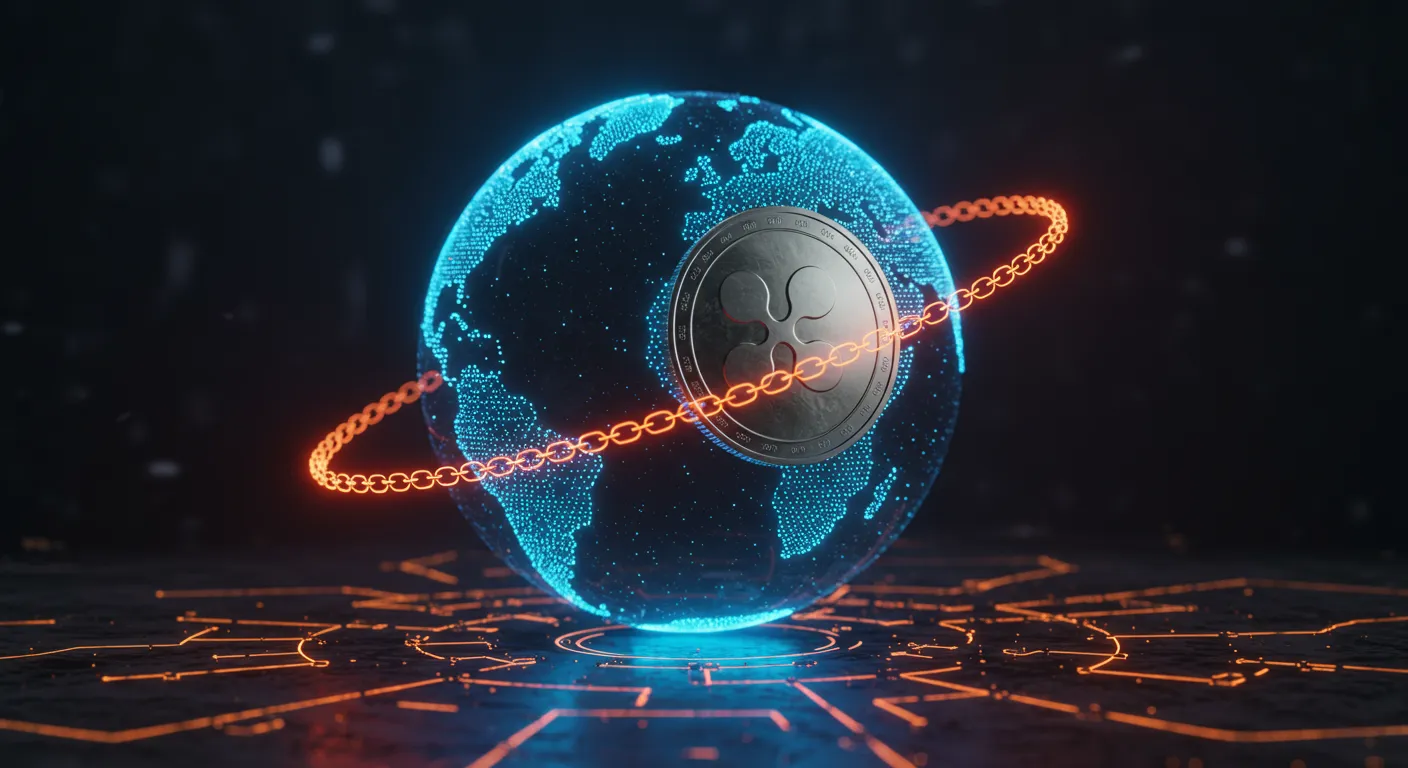
As of August 7, 2025, XRP is trading at around $2.97, reflecting its characteristic volatility. While it has experienced a minor pullback over the last 24 hours and a moderate correction over the past week, the asset has delivered an impressive 30.27% gain over the past month. This dynamic price action, common in the cryptocurrency market, naturally leads to a critical question: what are the core fundamental drivers underpinning XRP’s value today, and is the current trajectory sustainable for long-term growth? To answer this, we must delve deep into a comprehensive fundamental analysis of Ripple’s ecosystem and its competitive position.
The Foundational Strength: Cross-Border Utility and Institutional Adoption
XRP's primary and most compelling strength lies in its utility as a bridge asset for cross-border payments. The Ripple network, the infrastructure behind XRP, is engineered to provide an immensely fast, reliable, and low-cost alternative to legacy systems like SWIFT. A growing number of major banks and financial institutions globally, including prominent names such as Santander and Standard Chartered, have already integrated or are piloting Ripple's technology to streamline their international money transfers. This profound level of institutional adoption significantly validates the technology and bolsters confidence in XRP, setting it apart from purely speculative digital assets. The company's flagship product, On-Demand Liquidity (ODL), has become the central focus in 2025. ODL leverages XRP to settle payments instantly across borders, eliminating the need for financial institutions to pre-fund Nostro/Vostro accounts in destination currencies. This capability releases billions of dollars in trapped capital, presenting an enormous value proposition to the traditional finance sector. With new adoption corridors opening rapidly in high-growth regions like Asia, the Middle East, and Latin America, ODL is on a clear path toward mainstream utilization in global remittance and treasury operations. The increasing real-world use case generates substantial, organic demand for the XRP token. The key analytical challenge is determining if this rising utility demand can consistently outpace the token’s supply mechanics and market speculation to propel XRP to new price records.
Regulatory Clarity: The SEC Resolution Catalyst
For years, regulatory uncertainty stemming from the U.S. SEC’s lawsuit against Ripple cast a substantial shadow over XRP’s market potential, particularly in North America. However, the recent significant progress, including favorable court rulings that classified secondary market sales of XRP as non-securities transactions, has been a massive tailwind, dramatically boosting investor sentiment. While global regulatory risks are an inherent part of the crypto landscape, the increasing clarity in key jurisdictions like the United States has unlocked new avenues for adoption and integration. Ripple’s proactive stance on regulatory compliance positions it to benefit significantly as more countries establish definitive legal frameworks for digital assets. Following the effective resolution of the majority of the SEC case in 2025, Ripple is now free to pursue partnerships with major U.S. financial entities without the looming threat of legal action. This clarity has also fueled speculation and optimism regarding the potential launch of XRP-focused investment products, such as a Spot XRP ETF, in various regions a development that would channel a fresh wave of institutional capital into the asset. Ultimately, the successful navigation of this legal battle has provided XRP with a unique regulatory advantage in the market, removing a major long-standing uncertainty that plagued its price and adoption prospects.
Economic Structure: Supply Dynamics and Escrow Mechanisms
Economically, XRP's large total supply, capped at approximately 100 billion units, is often cited as a potential headwind. This contrasts with the capped and deflationary nature of assets like Bitcoin. The abundance of XRP could theoretically exert a continuous downward pressure on the price. However, Ripple actively manages this supply through a robust Escrow mechanism, which has locked up a significant portion of the total supply (historically around 40 to 50 billion XRP). The mechanism releases a controlled 1 billion XRP each month, primarily to finance operations and manage market liquidity, with any unspent portion being returned to escrow. This system mitigates the impact of the large total supply by introducing a degree of controlled scarcity and predictability, features welcomed by large institutional buyers. Critically, the growing demand from financial institutions utilizing ODL is expected to counterbalance the monthly escrow releases. As the volume of cross-border payments settled with ODL increases, the corresponding demand for XRP as the bridge asset rises, potentially overwhelming the supply pressure. Furthermore, the notable concentration of XRP ownership in a few large wallets, while raising broader concerns about decentralization, also suggests significant long-term institutional holdings and conviction in the asset’s future utility.
Ecosystem Expansion: Beyond Payments to DeFi and Tokenization
The applications of the Ripple network are continuously expanding far beyond its core payments functionality. In 2025, the XRP Ledger (XRPL) is increasingly being utilized as a platform for Real-World Asset (RWA) tokenization, Decentralized Finance (DeFi) applications, and Non-Fungible Tokens (NFTs). The low transaction costs and high speed of the XRPL are driving the emergence of new DeFi platforms that offer services like lending, borrowing, and stablecoin issuance. Additionally, Ripple is a key player in the nascent field of Central Bank Digital Currencies (CBDCs), actively collaborating with central banks and governments globally to develop CBDC solutions and pilot programs. Market speculation is also rife regarding broader policy shifts, such as potential crypto-friendly regulations in the United States, which many analysts believe could disproportionately benefit XRP due to its corporate backing and regulatory-compliant approach. The global adoption of the ISO 20022 standard by legacy financial systems, including SWIFT, is another critical tailwind. ISO 20022, an advanced messaging format, enhances the interoperability between Ripple’s network and traditional financial rails, further solidifying Ripple’s competitive advantage. These developments indicate that XRP is evolving from a mere payment solution into a multi-faceted platform for the future digital economy.
Technical Outlook and Market Risks
From a technical perspective, the Ripple network remains inherently efficient and highly scalable. XRP transactions achieve finality in mere seconds with negligible fees, making it one of the most attractive assets for practical, real-world utility. However, the recent market volatility serves as a reminder of the inherent short-term risks. A critical support level at 2.78 has recently been tested, and a decisive break below this mark could potentially lead to further declines toward the 2.65 level. Conversely, key technical indicators such as the Relative Strength Index (RSI) suggest the market is holding up with relative strength, hinting at the potential for an upward move. This could ignite a potential rally toward the major resistance zone at 3.50, and eventually challenge the previous all-time high near 3.84. However, inherent market risks must be continuously monitored. XRP's valuation is tied to Ripple's corporate strategy and the evolving global regulatory landscape, exposing it to unforeseen uncertainties. For instance, any new, restrictive regulations in major markets could trigger significant selling pressure. Nevertheless, the continuous, visible growth in adoption and practical applications represent powerful strengths. Competition from other blockchain payment solutions, including stablecoins and rival DeFi protocols, also poses an ongoing risk. Yet, Ripple's strategic focus on securing partnerships with regulated financial institutions provides a distinctive and durable competitive edge. For investors navigating this complex landscape, a disciplined approach involving thorough due diligence and robust risk management is absolutely essential.
Conclusion: The Market Outlook
In conclusion, the market outlook for XRP on August 7, 2025, leans decisively bullish but with a measured sense of caution. Institutional adoption of ODL, the significant progress in regulatory clarity, and the expanding utility of the XRPL are formidable tailwinds driving the asset's long-term value. However, the dynamics of its large supply and the ongoing, though diminished, global regulatory risks continue to present challenges. Could XRP successfully climb to the $4 mark or even surpass its historical high? The strong and improving fundamentals point toward a significant growth potential, but patience and constant vigilance are non-negotiable requirements for investors. The deep integration of XRP into the global financial infrastructure through ODL and its versatile utility are paving the way for higher, more sustainable valuations in the long run, cementing its position as one of the most practical and established digital assets in the entire crypto space.
Market Analysis
Neutral
70%
The article predicts a bullish outlook for XRP, but with caution due to regulatory risks.
Key Points:
- Global Adoption
- Crypto Regulations
- Ripple Network Utility
Resources & References
Sources and additional reading materials
Frequently Asked Questions
Common questions about this topic
Why is XRP important for international payments?
XRP enables fast, low-cost transactions for global money transfers.
Can regulations limit XRP’s growth?
Strict regulations may create selling pressure, but clarity can boost confidence.
What role does Ripple play in institutional adoption?
Ripple’s network collaborates with banks and institutions to enhance cross-border payments.
How does XRP’s supply affect its price?
XRP’s large supply can create downward pressure, but widespread adoption may offset it.
Is XRP a safe investment?
XRP has growth potential, but regulatory risks and volatility make it high-risk.