
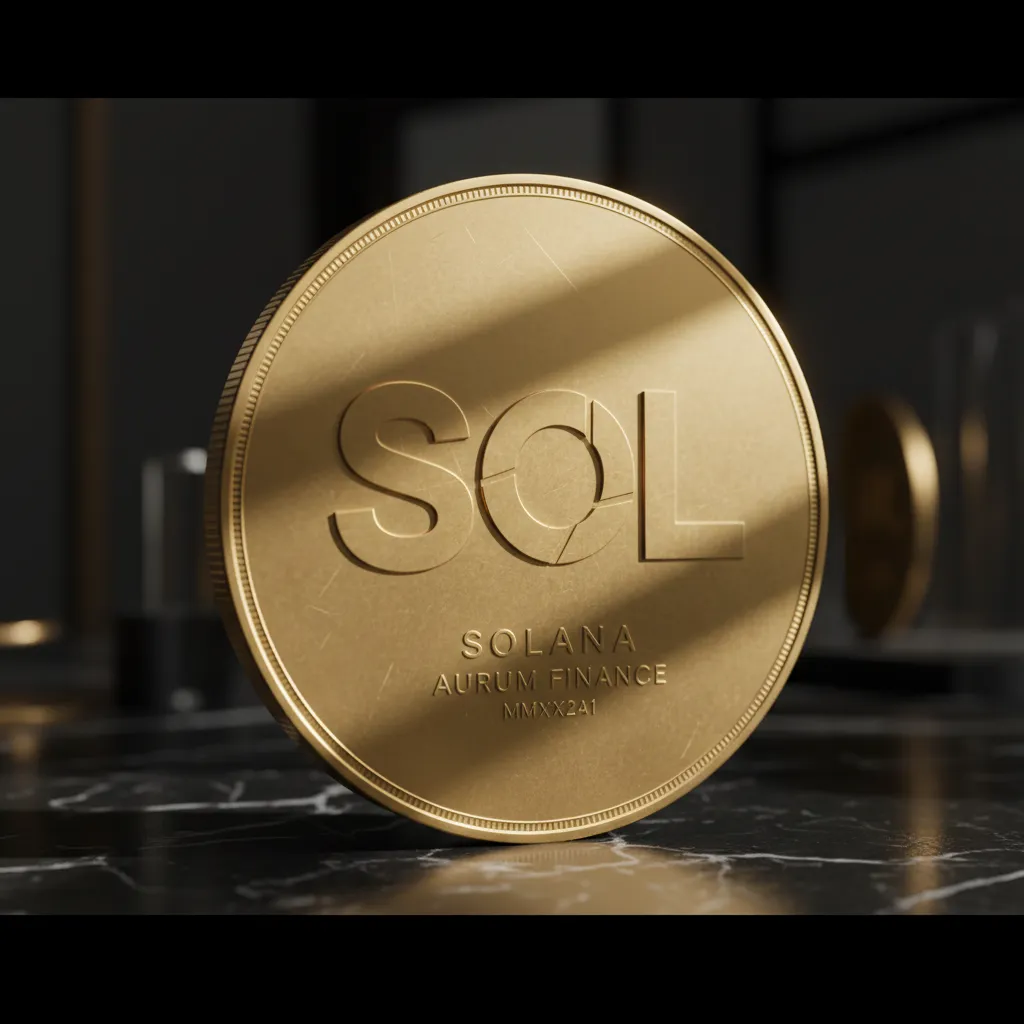
Fundamental Overview
BitMorpho Fundamental Analysis Report: Solana (SOL)
Introduction: The Architect of Internet Capital Markets
As of December 12, 2025, the Solana (SOL) network maintains its position as a foundational layer-1 contender, central to the evolving narrative of scalable, high-throughput decentralized infrastructure. Our deep dive focuses beyond short-term volatility to assess the enduring tokenomics, utility expansion, and on-chain activity that underpin its long-term investment thesis. Solana’s core value proposition rests on its architecture, which integrates Proof of History with Proof of Stake to deliver transaction speeds and costs that rival traditional Web2 systems, making it uniquely suited for global-scale financial applications.
From a market sizing perspective, Solana currently holds a significant position, with a reported Market Cap around 78.95 Billion and a Circulating Supply of approximately 562 Million SOL. This places it firmly within the top tier of digital assets. Crucially, the Total Value Locked (TVL) in its ecosystem reflects sustained utility, reportedly nearing 8.50 Billion, cementing its status as the second-largest DeFi ecosystem after Ethereum.
The "Big Picture" narrative for Solana has decisively shifted from speculative throughput to institutional integration and Real-World Asset (RWA) tokenization. Its North Star objective is the creation of "Internet Capital Markets," a frictionless environment solving for fragmented liquidity by co-locating digital cash and assets. This is evidenced by strategic partnerships with financial giants like BlackRock and Franklin Templeton, and the integration of major payment providers. Furthermore, significant developer growth, underscored by ongoing client development like Firedancer and network upgrades such as Alpenglow, signal a commitment to solidifying reliability and further reducing friction toward mainstream enterprise adoption. This report will analyze how these technical and adoption milestones are translating into sustainable token utility and economic stability for SOL.
Deep Dive Analysis
Tokenomics: A Framework for Sustainable Growth
Solana’s tokenomics are engineered to balance initial network incentivization with long-term supply control, aiming to support its high-throughput architecture. The native token, SOL, operates without a hard maximum supply cap, instead relying on a managed inflation schedule designed to decrease over time. Initially set at an 8% annual inflation rate, this rate is programmed to decline by 15% each year until it stabilizes at a long-term fixed rate of 1.5% annually. This disinflationary model is intended to gradually reduce token issuance as the network matures. Crucially, to counteract this issuance, Solana incorporates a token-burning mechanism: 50% of every transaction fee is permanently destroyed. This dynamic means that during periods of high network activity, the burn rate can offset or even exceed new token issuance, potentially creating short-term deflationary pressure on SOL.
Staking is fundamental to network security, rewarding validators for participation and incentivizing the delegation of SOL tokens. Validators earn rewards through a combination of inflation commission, block rewards, and Maximal Extractable Value (MEV). Regarding supply distribution and vesting, a significant portion of the total supply is allocated across various stakeholders, including Community Development (34.9%), Seed Investors (14.3%), and the Team (11.5%). Vesting schedules, often employing cliff periods, are in place to manage token release and align stakeholder interests with the protocol’s long-term success. A key factor for market sentiment remains the unlock schedule related to the FTX/Alameda bankruptcy proceedings, with tokens being released in tranches throughout 2025, requiring close monitoring for potential selling pressure.
On-Chain Metrics: Evidence of Utility
Solana's core investment thesis is strongly supported by recent on-chain data, which reflects significant user engagement and ecosystem growth. As of late 2025, the network continues to demonstrate dominance in raw performance metrics, with real-world sustained throughput often averaging between 1,000–4,000 Transactions Per Second (TPS), while maintaining theoretical peaks near 65,000 TPS. This high throughput is coupled with some of the lowest transaction costs in the industry, often hovering around an average fee of $0.00025 per transaction, making it highly attractive for high-frequency use cases like decentralized exchange (DEX) trading.
User activity metrics are robust: the network averaged 1.3 million daily active addresses in October 2025, with peaks exceeding 1.7 million. In Q1 2025, daily active wallets interacting with Solana averaged 2.2 million. This high level of engagement translates directly into Total Value Locked (TVL). While ecosystem TVL was reported near 8.50 Billion in the context, more recent data from October 2025 placed the TVL at 13.5 Billion, marking a substantial 132% year-over-year growth. This growth is underpinned by an expanding stablecoin market cap on the chain, which was reported near 15.6 Billion in early December 2025. Furthermore, DEX volumes are surging, with projected year-to-date 2025 DEX volume on Solana exceeding 500 Billion. These figures confirm that usage is increasingly structural, driven by DeFi, NFTs, and Real-World Asset (RWA) activity, rather than purely speculative spikes.
Ecosystem & Roadmap: Maturing Infrastructure
The Solana roadmap for 2025 centers on solidifying reliability and scaling capabilities to meet institutional and enterprise demands. The primary technological focus is on two major upgrades: Alpenglow and Firedancer. Alpenglow, a consensus overhaul, is designed to achieve near-instant finality, potentially down to 150 milliseconds, which rivals traditional Web2 systems. Firedancer, a high-performance validator client developed by Jump Crypto, aims to diversify the validator base, mitigate single-client failure risks, and further boost throughput, potentially beyond 1 million TPS in testing. This dual-pronged approach addresses past concerns regarding latency, downtime, and validator monoculture, signaling a move toward enterprise-ready stability. Developer activity is strong, with the ecosystem focusing on tools compatible with these new features, positioning Solana to scale high-throughput applications like high-frequency trading and gaming.
Competitive Landscape: Performance vs. Decentralization
Solana maintains a highly competitive position in the layer-1 landscape, primarily benchmarking against Ethereum and Avalanche. Its primary advantage over Ethereum lies in raw performance metrics: Solana boasts significantly higher TPS (e.g., 65,000 TPS theoretical vs. ~30 TPS for base-layer Ethereum) and drastically lower transaction fees (around 0.00025 vs. 2.93 for Ethereum). This positions Solana as the leader in user growth and consumer-focused applications where speed and cost are paramount. While Ethereum remains dominant in terms of overall ecosystem value and established developer support, Solana is aggressively closing this gap, especially in attracting institutional capital for RWAs. Compared to Avalanche, which pursues a modular architecture via subnets, Solana maintains a monolithic focus on maximum efficiency through its integrated Proof-of-History and Proof-of-Stake design. In terms of market metrics as of mid-2025, Solana generally demonstrated higher market capitalization, TVL, and daily trading volume than Avalanche, reinforcing its current position as the leading high-speed alternative to Ethereum. The success of Solana’s 2025 roadmap hinges on proving that its technical trajectory can sustain the current high level of utility and institutional adoption without sacrificing its core value proposition of speed.
Verdict
Conclusion: Fundamental Analysis of SOL
Solana's tokenomics present a sophisticated, dynamic model designed to transition from initial incentivization to long-term sustainability. The disinflationary schedule, coupled with the 50% transaction fee burn mechanism, creates a compelling structure where high network utility can translate into deflationary pressure on SOL supply. This mechanism directly supports the core investment thesis driven by robust on-chain metrics and ecosystem growth. The existing supply distribution, while mature, requires ongoing monitoring, particularly concerning the remaining unlock schedules tied to the FTX/Alameda bankruptcy estate, which represents a tangible overhang risk.
Biggest Growth Catalysts: Continued acceleration in network usage and developer adoption, which drives up the transaction fee burn rate, potentially leading to net supply reduction.
Biggest Risks: Significant token unlocks (especially those remaining from the FTX estate) creating periods of concentrated selling pressure, and any potential long-term technical headwinds impacting Solana's high-throughput capabilities.
Long-Term Verdict: Fairly Valued, leaning toward Undervalued if the current pace of utility growth outpaces the scheduled token unlocks. The market appears to be partially pricing in the utility but may still be discounting the long-term deflationary potential inherent in the fee-burn mechanism during peak activity.
***
*Disclaimer: This analysis is based solely on the provided information excerpt and should not be construed as professional financial advice. Investors should conduct their own thorough due diligence.*
Market Analysis
Bullish
78%
Bullish/Fairly Valued
Key Points:
- Layer-1 Blockchain
- Tokenomics
- DeFi & RWA
- Scalability
- Validator Clients
Resources & References
Sources and additional reading materials
Frequently Asked Questions
Common questions about this topic
What is Solana's core narrative shift according to the report?
The narrative has decisively shifted from speculative throughput to institutional integration and Real-World Asset (RWA) tokenization, centered on creating 'Internet Capital Markets.'
How does Solana's tokenomics create potential deflationary pressure?
Solana relies on a disinflationary schedule, but 50% of every transaction fee is permanently burned, meaning high network activity can offset new issuance and create deflationary pressure.
What are the two major technical upgrades mentioned for 2025?
The two major upgrades are Alpenglow, a consensus overhaul aiming for near-instant finality, and Firedancer, a high-performance validator client developed by Jump Crypto to boost throughput and diversify the validator base.